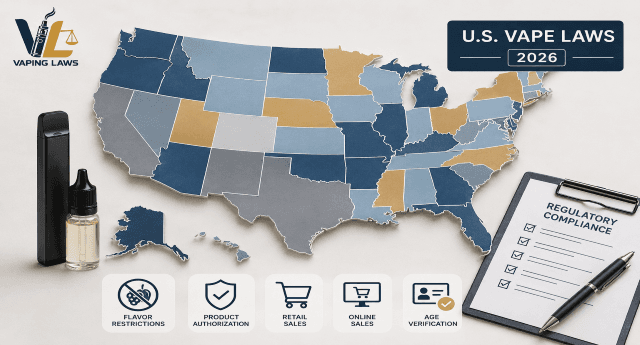






















Vaping laws in the United States in 2026 are more complex than ever. There is no single national vape ban, but a combination of federal enforcement, state-level flavor restrictions, product directory systems, and shipping rules has created one of the most fragmented regulatory landscapes in the world. What is perfectly legal to buy in Texas may be entirely prohibited in California.
This guide breaks down exactly where things stand — federal rules that apply everywhere, state-specific restrictions, age requirements, FDA authorization status, and what vapers need to know before buying or using vaping products anywhere in the US in 2026.
The Three-Layer System: How US Vaping Law Actually Works
Understanding US vaping regulation requires understanding that three separate layers of law operate simultaneously, and all three apply at once.
Layer 1 — Federal Law: Sets the national baseline. Applies in every state with no exceptions. Covers minimum purchase age, FDA product authorization requirements, and online shipping rules.
Layer 2 — State Law: States can be stricter than federal law but not looser. Covers flavor bans, product directory systems, excise taxes, and additional age requirements. Varies enormously by state.
Layer 3 — Local Law: Cities and counties can add restrictions on top of both federal and state rules. Covers indoor use restrictions, proximity rules near schools, and local flavor ordinances.
All three layers apply simultaneously. A product legal under federal law may be banned under state law. A product legal under state law may be prohibited by a local ordinance.
Federal Vaping Laws That Apply in Every US State
Federal rules form the unmissable baseline — every state inherits these regardless of how loose or strict their own laws are.
Minimum Purchase Age: 21 Nationwide
Since 2019, federal law — the Tobacco 21 (T21) law — makes it illegal to sell any tobacco or vapor product, including 0% nicotine vapes at most retailers, to anyone under 21 in every state. This applies without exception across all 50 states and Washington DC. Retailers face federal penalties for violations regardless of local enforcement intensity.
FDA PMTA Authorization: The Critical Requirement
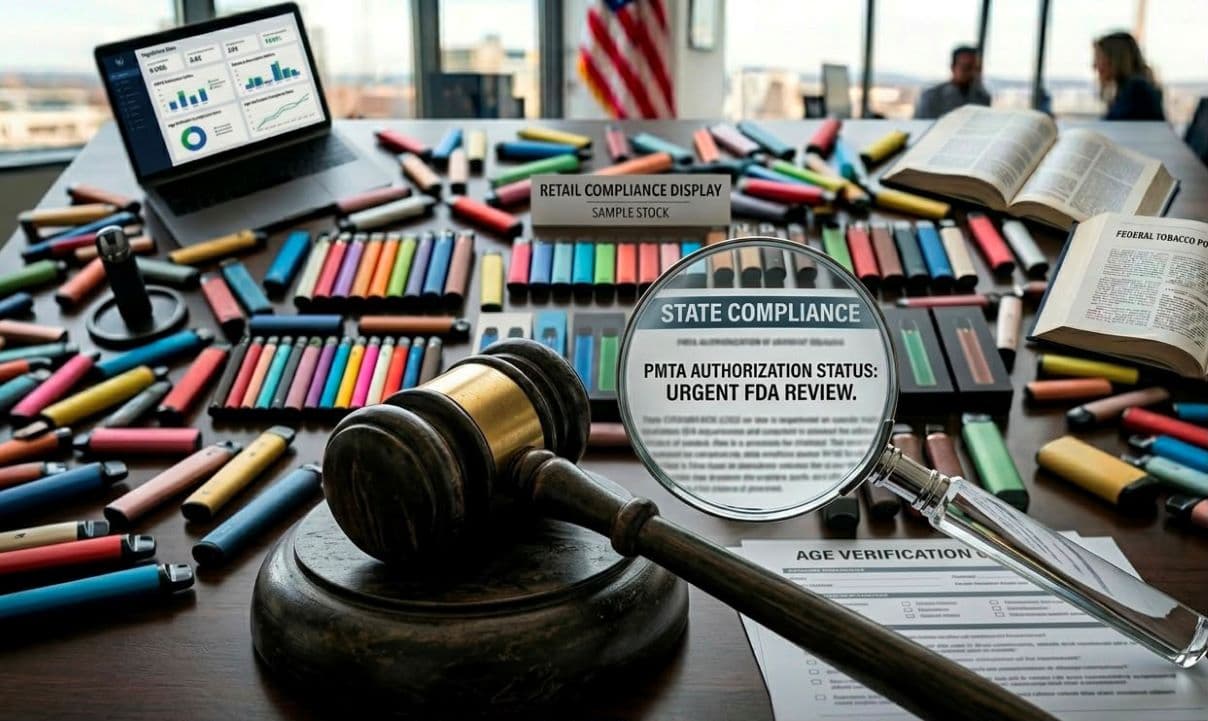
Under current FDA vape regulations, any nicotine-containing product — including those using synthetic nicotine — must receive a Premarket Tobacco Product Application (PMTA) authorization to be legally marketed. As of late 2025, the FDA has authorized fewer than 40 specific tobacco and menthol-flavored products. Technically, every other flavored disposable or e-liquid currently for sale is unapproved and subject to seizure.
This is the most significant federal development of 2026. The vast majority of popular vaping products — fruit-flavored disposables, most e-liquid brands, and nearly all imported devices — have not received PMTA authorization. This does not mean they are immediately seized everywhere, but it does mean federal enforcement can target them at any time.
FDA Enforcement Budget: $200 Million in 2026
The Senate directed the FDA to allocate $200 million in FY2026 for enforcement against unauthorized vapes. The agency issued warning letters to 24 importers of illicit vapes in 2025 and has expanded its "seize and destroy" authority at the border for unauthorized shipments. This represents a fundamental shift from regulation to active enforcement.
PACT Act: Online Purchase Rules
Online vape sellers must follow the federal PACT Act, which sets registration, age-verification, carrier and record-keeping rules for shipping vapor products. Most major carriers — UPS, FedEx, USPS — no longer accept vaping products for consumer delivery. This has significantly limited online purchasing options for US vapers regardless of their state's laws.
State-by-State: Flavor Bans, Directories & Restrictions
State law is where the US vaping market actually fractures. The same disposable that's on a Florida shelf may be illegal a state line away.
States With Full Flavor Bans
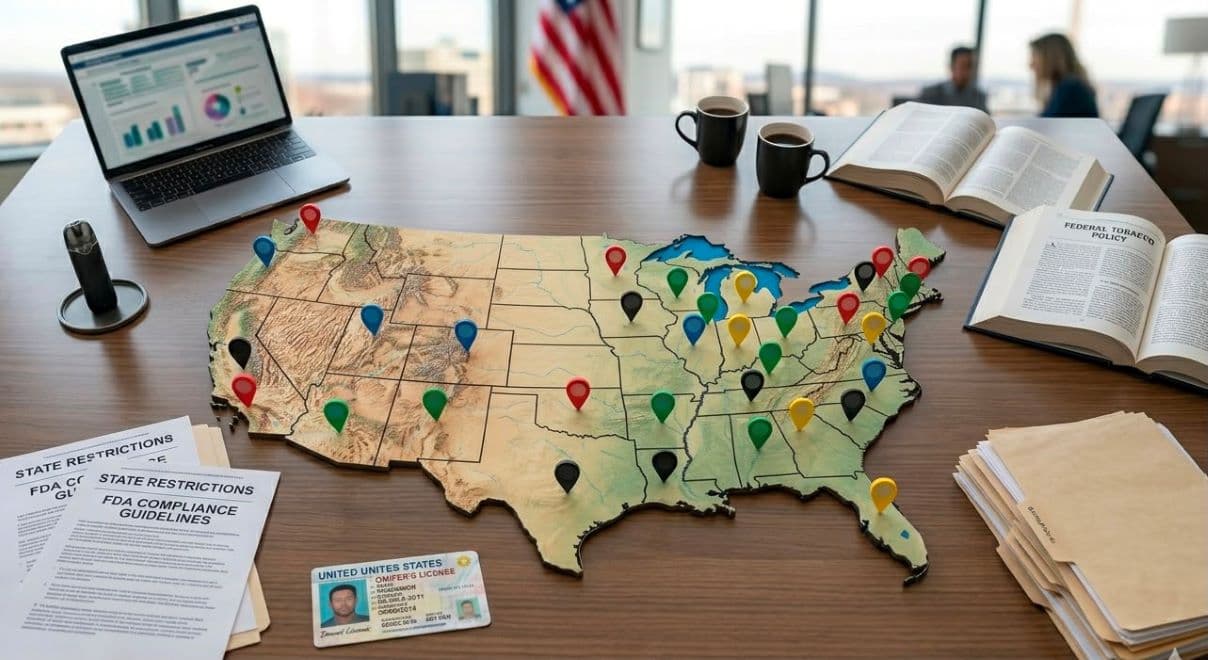
As of 2026, states with full flavor bans include California (all flavors, Prop 31), Massachusetts (all flavors including menthol), New Jersey (all flavors), New York (all flavors except tobacco and menthol), Rhode Island (all flavors), and Colorado (effective 2024). Oregon and Washington also enacted flavor restrictions in 2024.
In these states, fruit, dessert, candy, and mint-flavored vaping products cannot be legally sold through any retail channel. Only unflavored or tobacco-flavored products remain available, and in California, even those must appear on a state-approved list.
California is the strictest. Effective January 1, 2026, California's Unflavored Tobacco List went into full effect. Only products explicitly approved by the state Attorney General can be sold. This effectively removes the vast majority of products from legal retail sale.
New Jersey has tripled its excise tax alongside the flavor ban. New Jersey bans all flavored vape products including menthol. Only tobacco-flavored products are legal. The state tripled its excise tax to $0.30 per milliliter.
States Using Product Directory Systems
Directory systems are the fastest-growing regulatory trend. Instead of banning flavors outright, states like Wisconsin and North Carolina create a "whitelist" of allowed products. To be listed, manufacturers must prove FDA compliance via PMTA submission. Since most disposable brands lack this status, they are automatically illegal. In North Carolina, this system removed nearly 7,000 products from shelves overnight.
Pennsylvania joined this model in April 2026. Pennsylvania enacted a new law establishing a statewide vape directory that will determine which e-cigarette products can legally be sold, targeting the rapid growth of disposable vapes, particularly those marketed to minors. The law requires the state Attorney General to create and maintain a list of approved nicotine vaping products and manufacturers.
States With Open Markets (Federal Baseline Only)
States including Texas, Florida, Tennessee, and most of the South and Midwest currently follow federal baseline rules only — age 21+, FDA authority applies, but no state-level flavor ban or directory system. What's legal to sell in Tennessee is banned in New Jersey. What ships to Texas won't ship to California. A product that's on the shelf in Florida may be illegal in Wisconsin.
Texas took a unique approach — rather than banning flavors, it bans products based on where they are made, targeting Chinese-manufactured disposable vapes specifically.
Disposable Vapes: The Primary Target of 2026 Regulations
Disposable vapes are the primary target of 2026 regulations for two reasons: youth appeal and environmental impact. California has proposed legislation to ban all battery-embedded, single-use vapes by mid-2026 due to the lithium waste they generate. Nationally, the FDA and DOJ task forces have prioritized enforcement against "toy-like" disposables that feature games, screens, or bright colors.
The scale of the enforcement challenge is significant. Public health experts warn that enforcement shortcomings risk undermining regulatory objectives. While usage rates among teens have declined in recent years, an estimated 1.6 million US minors still use e-cigarettes, with many drawn to unauthorized flavored products. The GAO report concludes that stronger coordination and more assertive federal enforcement will be required to meaningfully curb the illegal vape trade.
For consumers, the practical implication is straightforward: the most popular disposable vape brands — Geek Bar, Elf Bar, Lost Mary, Flum — do not have FDA PMTA authorization. They exist in a legal gray zone where they are widely available at retail but technically subject to federal enforcement action at any time.
Where You Can and Cannot Vape in the US
Public-use restrictions stack on top of purchase laws — and they vary even within a single state.
Federal Restrictions on Where You Can Vape
Federal law prohibits vaping in all locations where smoking is prohibited under federal jurisdiction. This includes all federal buildings, federal parks and monuments, domestic airline flights, and Amtrak trains. These restrictions apply nationwide regardless of state law.
State and Local Indoor Use Restrictions
Most states have extended their indoor smoking bans to include vaping. The specific coverage varies — some states apply the ban only to enclosed workplaces, others extend it to bars, restaurants, hotel rooms, and outdoor areas near building entrances. Before vaping indoors in any US location, checking the specific state and local ordinance is essential.
Public Spaces and the Growing Local Ordinance Trend
Around 15 states are expected to weigh some form of flavored tobacco and nicotine ban in 2026, with local ordinance activity growing. Cities in states without statewide flavor bans are increasingly passing their own local ordinances, meaning a city can ban flavored vapes even if its state has not.
What Is and Is Not FDA Approved in 2026
The future of vaping in America is moving toward a highly regulated model. As the FDA clears the backlog of PMTAs, authorizations will likely be limited to devices with high-tech age-verification features or those that strictly use tobacco or menthol flavors.
FDA published draft guidance indicating potential authorization pathways for mint, coffee, cinnamon, and spice-flavored e-cigarettes. Fruit, candy, and dessert flavors remain unlikely to be approved.
Currently, FDA-authorized products are almost exclusively from established tobacco companies — Vuse, NJOY, and select blu products. These represent a tiny fraction of the products currently available at US retail. Everything else — including most of the world's most popular vaping brands — operates without authorization.
Online Purchasing Laws for US Vapers
Buying vapes online in the US has become significantly more difficult under the 2026 framework.
States with strong flavor bans often prohibit flavored shipments. In states without a ban, online ordering may be possible but is not guaranteed. Federal PACT Act rules and carrier policies continue to limit shipping options. If you live in a restricted state, online purchasing of flavored vapes may be difficult or unavailable.
The PACT Act requires online sellers to verify age, register with federal authorities, use only compliant carriers, and maintain detailed records of every sale. Most major carriers have exited the consumer vape shipping market entirely, making delivery logistics a significant practical barrier for online purchases across the country.
Key Vaping Law Facts Every US Vaper Should Know in 2026
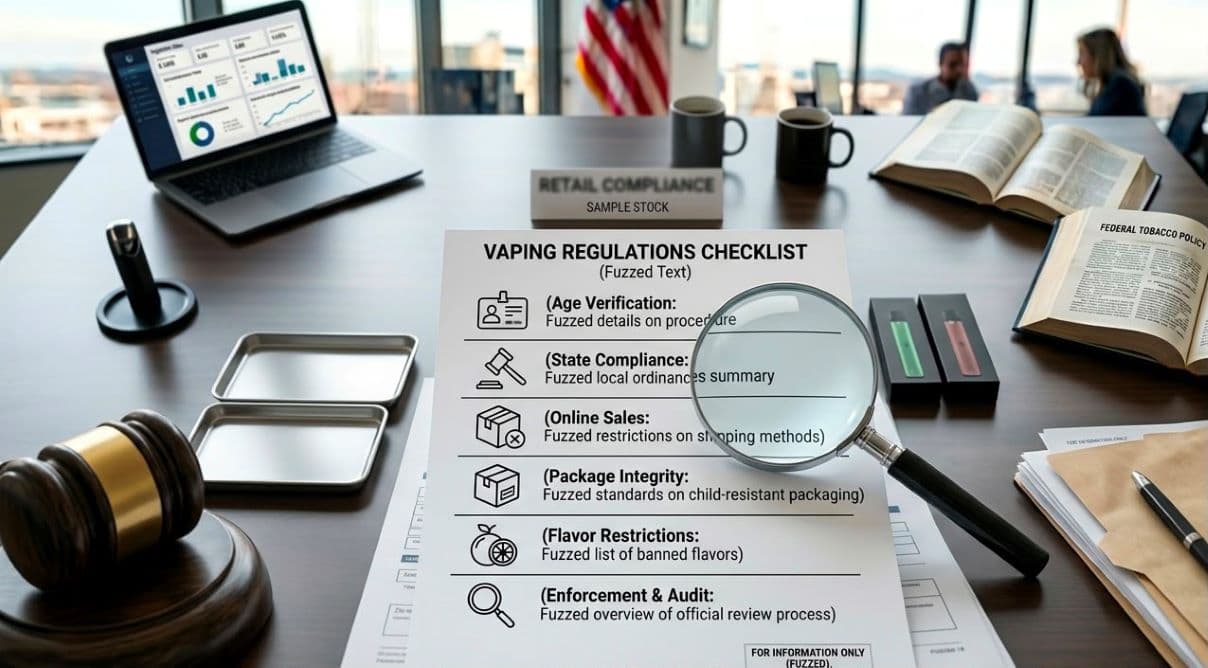
A quick checklist of the rules that actually decide what you can buy, ship, and use in 2026.
Key Facts at a Glance
- Age limit is 21 nationwide
No exceptions. Applies in every state under federal Tobacco 21 law.
- No nationwide vape ban
As of 2026, there is no nationwide ban on vaping products in the US. Federal law still allows vaping under age restrictions and regulatory oversight.
- Flavor bans apply in 6+ states
California, Massachusetts, New Jersey, New York, Rhode Island, Colorado, Oregon, and Washington have statewide flavor restrictions. More states are considering them in 2026.
- Most popular brands lack FDA approval
Fewer than 40 products have received PMTA authorization. The vast majority of popular vaping products are technically unauthorized under federal law.
- Directory states are expanding
Wisconsin, North Carolina, Pennsylvania, and Tennessee use approved product lists. Products not on the list cannot be legally sold regardless of federal status.
- Online shipping is restricted
PACT Act compliance requirements and carrier policy changes have made consumer vape delivery significantly more difficult across the US.
- Disposables are the enforcement priority
FDA and DOJ task forces have specifically prioritized enforcement against unauthorized flavored disposables and toy-like devices in 2026.