




















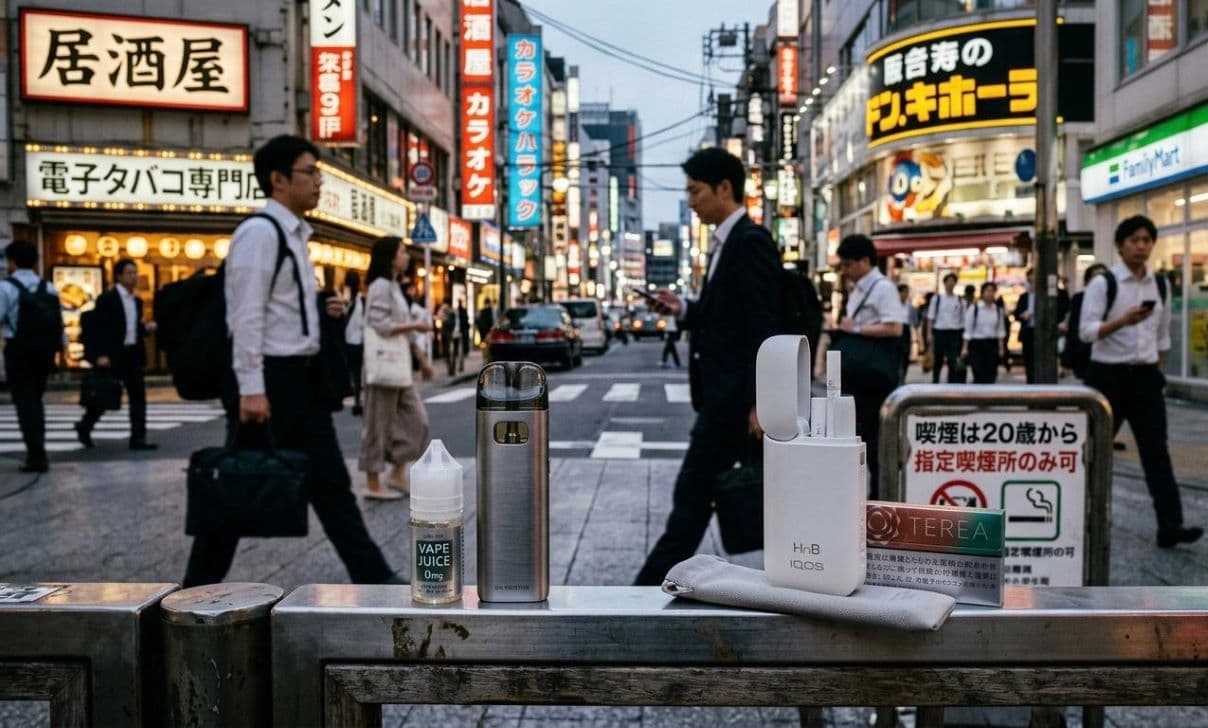
Japan operates the most unusual vaping regulatory framework of any major country in the world. Nicotine e-liquids, the core product in global vaping markets, cannot be legally sold anywhere in Japan. Heat-not-burn tobacco products like IQOS are not only legal but have made Japan the world's largest heated tobacco market. Non-nicotine vapes are sold freely in shops. And visiting vapers can bring in a limited personal supply of nicotine liquid through customs, but cannot buy any once they arrive.
Understanding Japan's vaping laws requires abandoning almost every assumption built from other countries' regulatory models. This is not a market with a nicotine strength cap, a flavour ban, or an age-gating problem. It is a market where the distinction between nicotine and non-nicotine completely determines whether a product is legal to sell at all. This guide explains the framework clearly — for residents, tourists, and anyone trying to understand why Japan's vaping market looks nothing like anywhere else in the world. For comparison with other major Asian markets, read our Vaping Laws in South Korea 2026 guide.
The Foundation: Why Japan's System Is Unlike Any Other
A single pharmaceutical classification — not a vaping-specific law — is what makes Japan's market behave so differently from every other country.
The PMD Act: Nicotine as a Pharmaceutical
The cornerstone of Japan's approach to vaping regulation lies in a critical distinction based on nicotine content. Under the country's Pharmaceutical and Medical Device Act (PMD Act), e-liquids and e-cigarettes containing nicotine are classified as medicinal products. This single classification determines everything about how the Japanese vape market operates.
Because nicotine is treated as a pharmaceutical ingredient rather than a consumer product component, nicotine-containing vaping products require specific pharmaceutical approvals and medical licenses before they can be sold. This means they cannot be sold commercially unless they receive official medical approval, which most vape liquids do not have. No consumer vaping product has successfully navigated this approval pathway.
The effective result: nicotine e-liquids are banned from commercial sale in Japan — not through an explicit prohibition, but through pharmaceutical classification that makes compliant sale practically impossible for any mass-market product.
The Two-Tier Market This Creates
Non-nicotine products are treated as consumer goods. Vaping devices and e-liquids that do not contain nicotine fall outside this strict pharmaceutical framework. Instead, they are regulated under general consumer product safety laws, making them legal to manufacture, import, and sell within Japan, subject to ensuring product safety.
This creates a clean market split that exists nowhere else globally: nicotine vaping is effectively banned from domestic sale, while nicotine-free vaping operates as a normal consumer product. Nicotine-free flavoured e-liquid is widely available at vape shops, Don Quijote, and some convenience stores.
Heat-Not-Burn: Why IQOS Dominates Japan
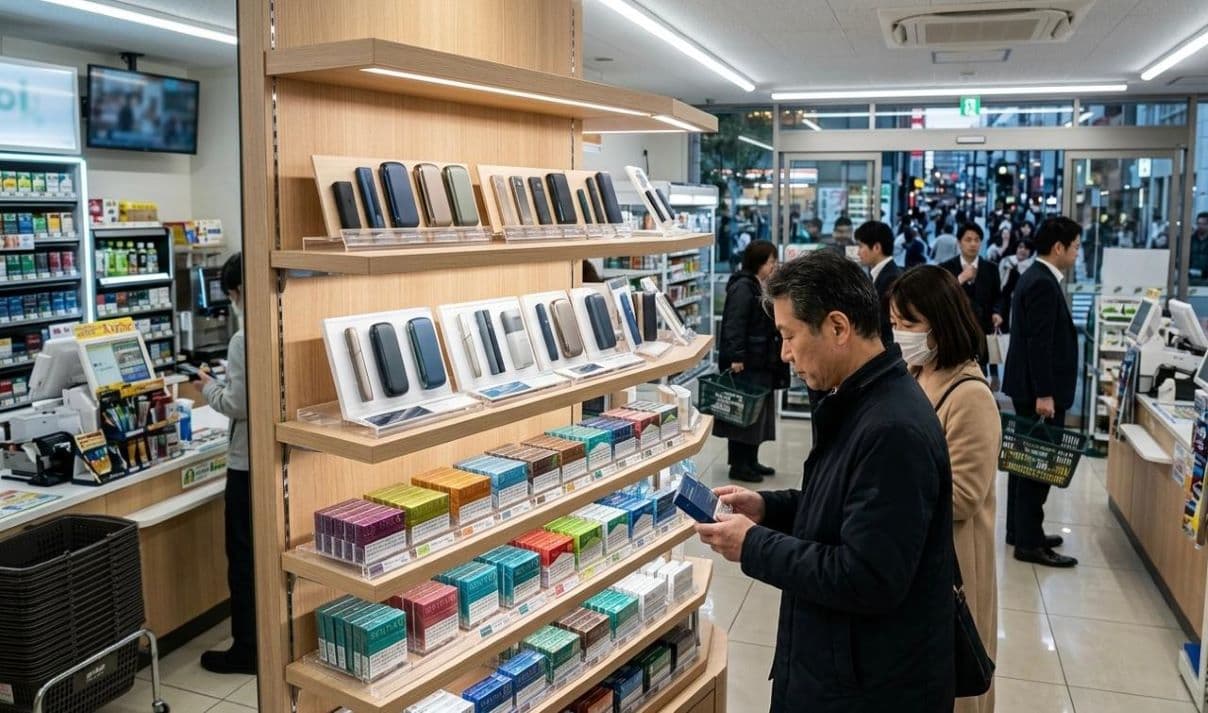
Japan's pharmaceutical classification of nicotine has inadvertently paved the way for Heat-Not-Burn (HNB) tobacco products like IQOS to gain significant market share, as they are regulated under existing tobacco laws and face fewer hurdles to sell than nicotine e-cigarettes.
Heat-not-burn devices like IQOS, glo, and Ploom are legal because they use actual tobacco, which is regulated differently from pharmaceutical nicotine. Because HNB devices heat real tobacco leaf rather than a synthetic or extracted nicotine liquid, they fall under Japan's Tobacco Business Law — a completely separate framework from the PMD Act that governs pharmaceutical products.
The result is a market paradox: a traditional cigarette company's heated tobacco product (IQOS) faces fewer regulatory barriers to commercial sale than a modern nicotine salt e-liquid. Japan has become the world's largest heated tobacco market, and by some measures the most developed HNB market per capita globally.
For vapers accustomed to salt nicotine pod systems and disposable vapes, the nearest equivalent legally available in Japan without a personal import is an IQOS device with Terra or Heets sticks — tobacco-heated, not liquid-vaporized, but providing nicotine in a regulated, commercially available format.
Age Restrictions: 20 Years Old, Not 18 or 19
You must be at least 20 years old to purchase or use any vaping products in Japan, even non-nicotine ones.
This is a frequently misunderstood point for international visitors. While Japan lowered the general age of adulthood to 18 in 2022, the age limit for tobacco, alcohol, and vaping products remains 20 years old. The reduction in Japan's age of majority did not extend to substances — tobacco, alcohol, and vaping products all retain the historical 20-year minimum purchase age.
This applies to non-nicotine vapes as well, not just nicotine products. A 19-year-old legally considered an adult in Japan for voting, contracts, and most civil matters cannot legally purchase a nicotine-free vaping device. Retailers are legally required to verify age before any vaping product sale.
The Personal Import Rule: 120ml for Travelling Vapers
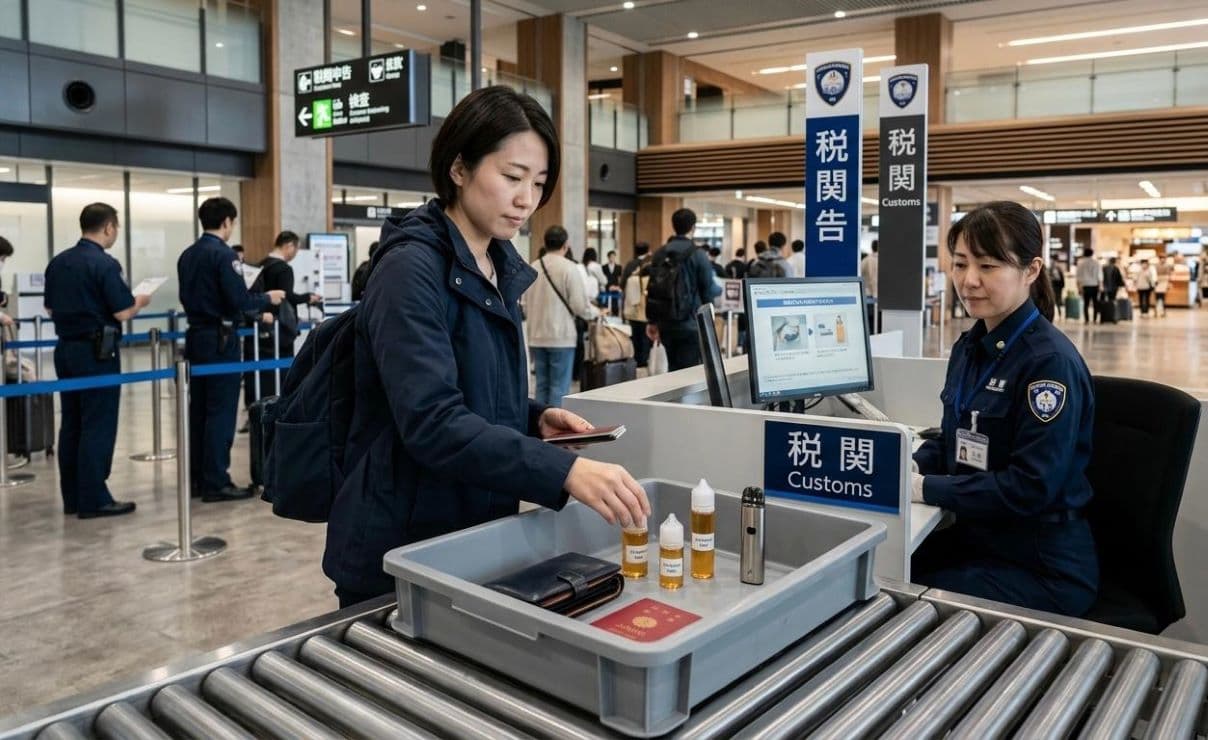
Travellers who use nicotine vapes usually need to bring a limited personal supply with them, as purchasing nicotine e-liquid locally isn't possible.
The Ministry of Health, Labour and Welfare allows individuals to import up to a one-month supply. Typically, this is interpreted as 120ml or less of nicotine-containing liquid. Anything beyond this may be considered a violation and could lead to confiscation at customs.
This is the practical guideline that every visiting vaper needs to know: staying within the usual allowance of around 120ml of nicotine e-liquid will help avoid problems at customs.
The 120ml figure covers approximately one month of moderate daily vaping use. For visitors staying longer, or heavy daily users, this calculation becomes more complex. There is no mechanism to top up supplies domestically — no Japanese retailer can legally sell nicotine e-liquid, regardless of what a seller claims. Anyone offering nicotine-containing e-liquid for retail purchase inside Japan is operating outside the law.
Nicotine-free e-liquid has no import quantity restriction for personal use and can be purchased freely inside Japan at vape specialty stores, Don Quijote, and some convenience stores.
Flavour Restrictions: Youth Protection Measures
Certain restrictions exist regarding vaping flavours. Japan has limited flavours that appeal predominantly to minors, such as candy and bubblegum profiles. This regulation aims to deter youth from starting to vape, as flavours are a significant factor influencing young users' choices.
This applies to the non-nicotine products that are actually available for retail sale in Japan. Flavours marketed primarily to young people or using child-appealing imagery — candy, bubblegum, and similar categories — face restrictions under youth protection measures enforced by the Ministry of Health, Labour and Welfare.
Tobacco and menthol profiles, and many adult-oriented fruit profiles, remain available within the non-nicotine domestic market. The restriction targets marketing appeal rather than all non-tobacco flavours categorically. A wide variety of flavours are available, ranging from tobacco and menthol to fruits and desserts. However, restrictions are placed on flavourings specifically positioned to appeal to youth.
Where You Can and Cannot Vape in Japan
Japan treats vaping the same as smoking. The 2020 Health Promotion Act significantly restricted indoor smoking and vaping.
Indoor Rules
Vaping is restricted to designated smoking rooms (喫煙室, kitsuen-shitsu) indoors. These exist in some restaurants, airports, and larger public buildings, but the majority of indoor venues in Japan are entirely smoke-free following the 2020 Health Promotion Act. Vapes are subject to the same indoor rules as cigarettes under the Health Promotion Act — only in designated smoking rooms.
Airports follow the same framework. Narita and Haneda airports have designated smoking rooms both before and after security. Look for 喫煙室 (kitsuen-shitsu) signs. Vaping is only permitted in these designated areas, not in terminals or gates.
Outdoor Rules
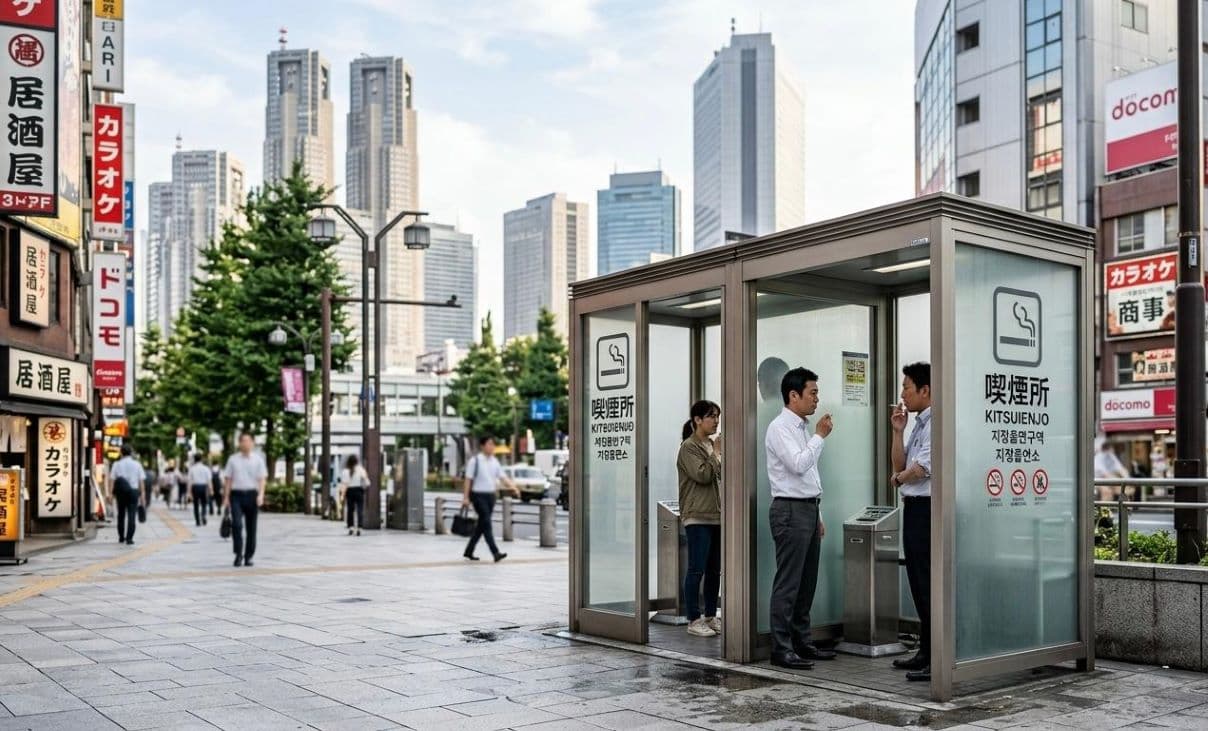
Many cities restrict smoking and vaping on public streets, with designated smoking areas provided instead. Ignoring these rules may result in fines, especially in urban areas like Tokyo or Osaka.
Tokyo has particularly strict street-level ordinances. Most of central Tokyo prohibits street smoking and vaping in public areas — designated outdoor smoking spots are provided but can be difficult to locate. Many cities fine street smoking outside designated zones. The practical approach for visitors: use the MottoSuitai app or similar tools to locate the nearest designated smoking spot before vaping outdoors in any Japanese city.
Non-nicotine vapes are legally less restricted, but indistinguishable from cigarettes visually. Staff and bystanders typically treat nicotine-free vapes the same as cigarettes, so use designated smoking spots regardless.
Ingredient Transparency and Manufacturing Standards
The Ministry of Health, Labour and Welfare has implemented rules requiring manufacturers to disclose the ingredients of their vaping liquids. This transparency is intended to inform consumers about the risks associated with these products. Additionally, there are technical standards for the manufacturing process of e-cigarettes to minimise potential health risks.
These requirements apply to products legally sold in Japan — primarily non-nicotine e-liquids and vaping hardware. Manufacturers and importers of non-nicotine vaping products must comply with Japanese consumer product safety standards, including ingredient disclosure, before their products can be legally marketed.
Key Japan Vaping Law Facts at a Glance
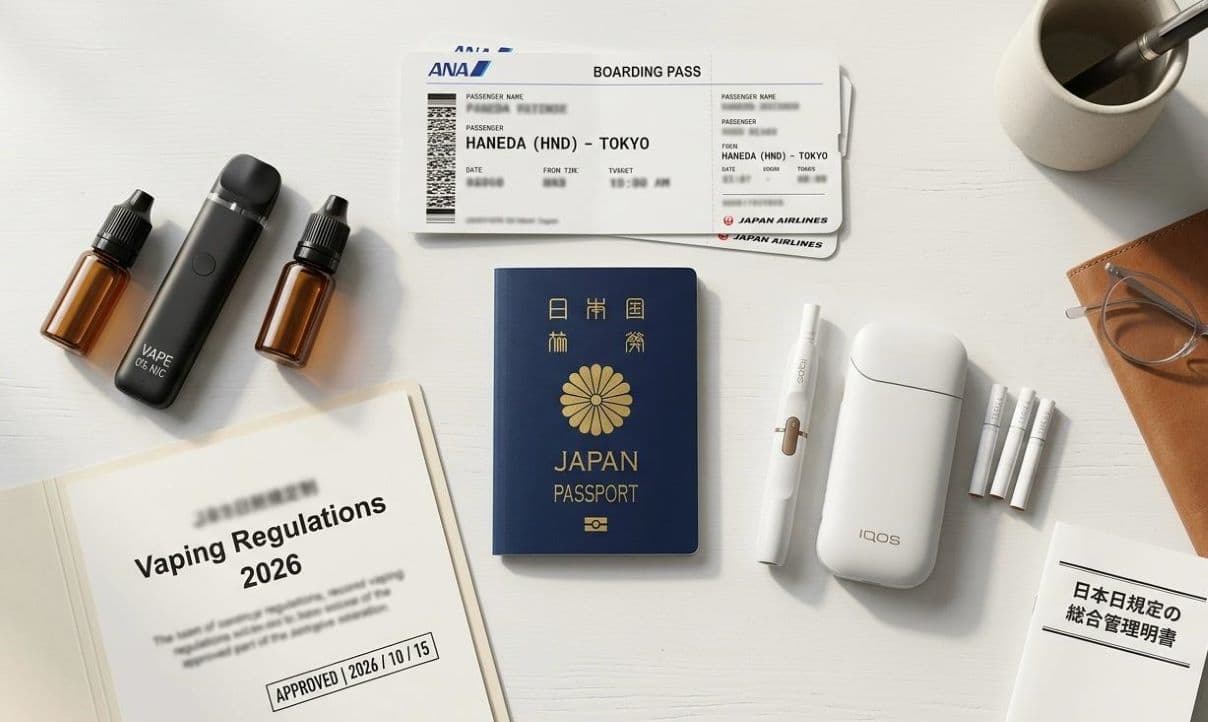
A quick reference for what actually decides what you can buy, sell, or use in Japan in 2026.
Key Facts at a Glance
- Vaping is legal in Japan
But with restrictions that make it function very differently from most other markets globally.
- Nicotine e-liquids cannot be sold domestically
Classified as pharmaceutical products under the PMD Act. No consumer vaping product has received the required medical approval — effectively a commercial ban on nicotine e-liquid retail sales.
- Non-nicotine vapes are fully legal
Available at vape shops, Don Quijote, and some convenience stores. No special license required for purchase or use.
- Age limit is 20 years old
Applies to all vaping products including non-nicotine. Higher than most countries, despite Japan lowering the general adult age to 18 in 2022.
- 120ml personal import allowance
Visiting vapers may bring approximately one month's supply of nicotine e-liquid through customs. No domestic purchase option exists.
- Heat-not-burn (IQOS, glo, Ploom) fully legal
Regulated under tobacco law, not the PMD Act. Widely available at convenience stores and dedicated shops across Japan.
- Vaping treated the same as smoking
Designated smoking room rules apply equally to vaping under the 2020 Health Promotion Act. Indoor vaping outside designated rooms is not permitted.
- Youth-appealing flavours restricted
Child-targeted flavour marketing and candy/bubblegum style profiles face restrictions. Adult-oriented flavours and tobacco profiles remain available.