

















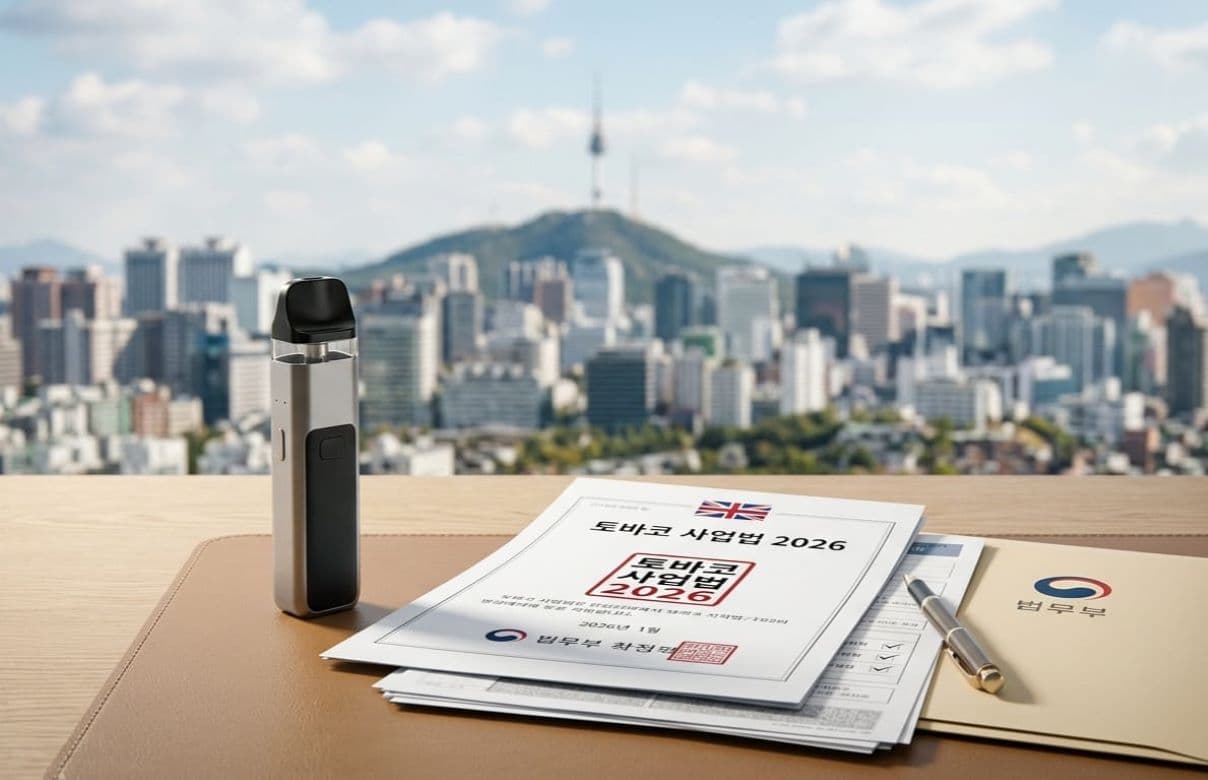
April 24, 2026 marked the most significant change to South Korea's vaping regulations since the country first legalized e-cigarettes. For the first time since 1988, the legal definition of "tobacco" in South Korea was rewritten — and with it, the entire regulatory framework governing synthetic nicotine vaping products changed overnight.
This was not a minor update. It was a complete reclassification that closed a 37-year-old loophole, brought millions of products under tobacco control for the first time, and fundamentally restructured how vaping products can be sold, marketed, taxed, and used across the country. This guide explains exactly what changed, what remains legal, and what every vaper in South Korea needs to understand in 2026.
The April 2026 Watershed: What Actually Changed
The single April 24, 2026 amendment redefined the legal meaning of "tobacco" in Korea for the first time since 1988 — and folded every nicotine vape into the tobacco regulatory regime overnight.
The 37-Year Loophole That Just Closed
Before April 24, 2026, South Korea's Tobacco Business Act defined tobacco strictly as products derived from actual tobacco leaf. This meant synthetic nicotine — the type used in virtually all modern disposable vapes and bottled e-liquids — existed in a legal gray area outside tobacco regulation entirely. No tobacco tax. No health warning requirements. No advertising restrictions. No smoke-free zone enforcement. No age verification mandate for vending machines.
South Korea classified synthetic nicotine e-cigarettes as tobacco under a revised Tobacco Business Act that took effect on April 24, 2026, marking the first change to the legal definition of tobacco since 1988. The amendment closed a regulatory loophole that previously excluded synthetic nicotine products, bringing them under existing tobacco controls.
The closure of this loophole brought an estimated ₩1.3 trillion in new government revenue over five years through tobacco excise duties that previously could not be applied to synthetic nicotine products.
What the New Definition Covers
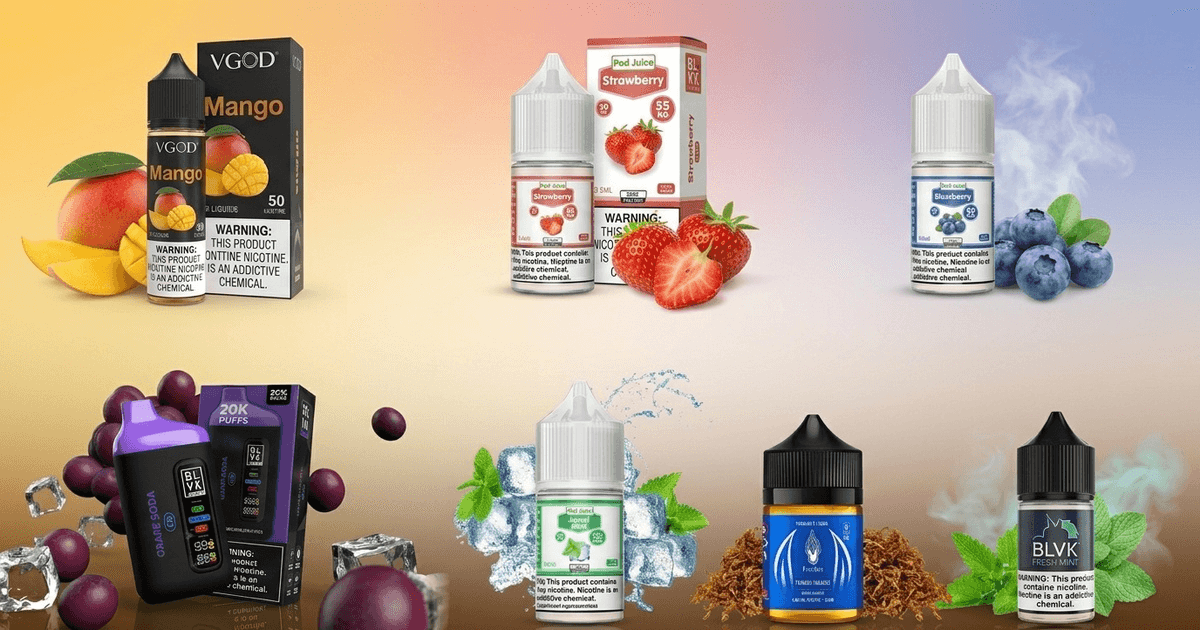
The legal definition of tobacco now expands to include all nicotine products, synthetic or leaf-based. Every product containing nicotine, regardless of whether that nicotine is derived from tobacco leaves or synthesized in a laboratory, is now legally classified as tobacco under Korean law. This includes all salt nicotine e-liquids, disposable vapes, prefilled pod systems, and open pod system e-liquids.
The Four Pillars of the 2026 Korean Vaping Framework
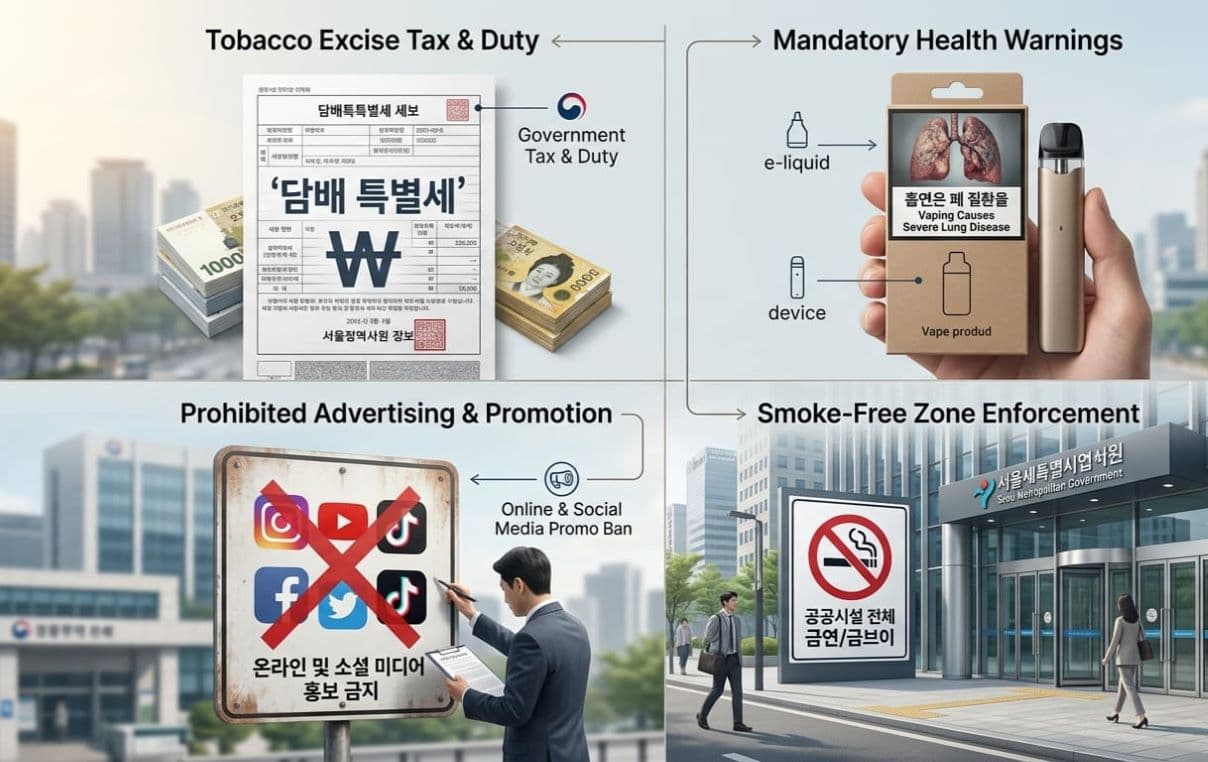
The amendment activates four parallel control mechanisms — all of which now apply to every nicotine vape sold in Korea.
1. Tobacco Excise Tax
All nicotine-containing vaping products are now subject to the same excise duties as conventional cigarettes. Previously, synthetic nicotine products paid no tobacco tax, creating a significant price advantage over tobacco-derived nicotine products. That advantage is now eliminated. Pricing for compliant vaping products has increased to reflect tax obligations previously avoided through the synthetic nicotine classification.
2. Mandatory Health Warning Packaging
Under the new framework, synthetic nicotine e-cigarettes are subject to mandatory health warning images and text on packaging. All vape packaging must feature graphic health warnings covering a minimum percentage of the display area, similar to requirements on conventional cigarette packs. Products without compliant packaging cannot be legally sold in Korea regardless of their nicotine source.
3. Advertising and Online Sales Bans
Online sales, social media promotion, external store displays, and sponsorships will be banned. Flavor-based marketing aimed at young people will be prohibited. This represents a fundamental shift for products that previously operated entirely outside tobacco advertising restrictions. Flavored labels appealing to minors are prohibited; non-smoking area bans now apply to vapes.
4. Smoke-Free Zone Enforcement
Use bans in smoke-free areas such as schools, hospitals, and government buildings now apply to all vaping products regardless of nicotine source. Previously, synthetic nicotine vapes could technically be used in smoke-free zones because they fell outside the tobacco definition. That exception is permanently closed.
Age Restrictions: 19+ Across All Vaping Products
You must be 19 or older (Korean age system) to purchase vaping products in South Korea. This matches the legal age for tobacco products.
The 19+ age requirement now applies uniformly across all nicotine-containing vaping products, including those previously sold without age verification through unmanned vending machines. This is a genuine enforcement change. A recent inspection of 241 machines revealed a systemic failure: 11% allowed purchases without any adult authentication. The 2026 amendments specifically target this gap.
From February 2026 — two months before the main April amendment — vending machines faced enhanced requirements. Additional restrictions on vending machines including age-verification requirements and bans near schools began from February 2026, further tightening how synthetic nicotine products can be sold. Machines without compliant adult-authentication technology are now illegal. Machines positioned near schools or in non-adult zones face immediate enforcement action.
Heavy penalties carry fines up to 10 million won ($6,890) or one year imprisonment for violations including selling to minors or operating non-compliant vending machines.
Nicotine Limits: The 20mg/ml Cap
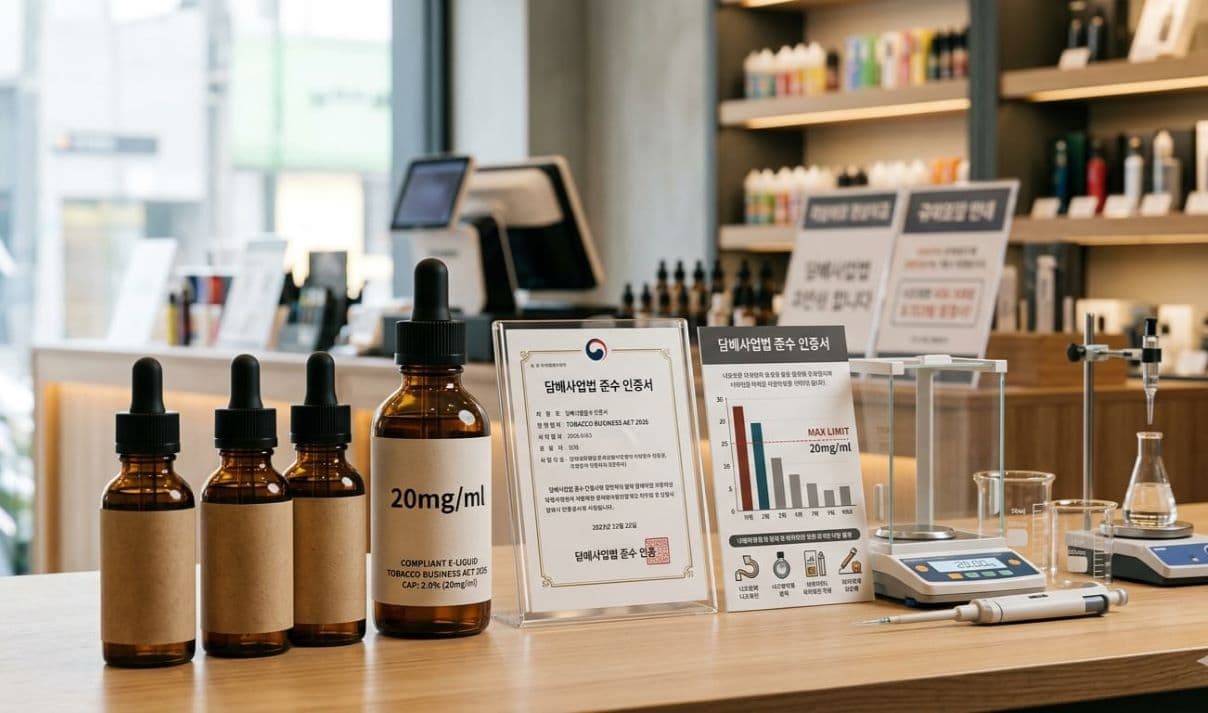
South Korea limits nicotine to 20mg/mL for e-liquids. Products exceeding this limit cannot be legally sold.
This is one of the most practically significant restrictions for Korean vapers — and one that most new buyers do not fully understand until they have already made a disappointing purchase.
What the 20mg/ml Cap Means in Practice
The 20mg/ml (2%) domestic retail cap means that the 50mg (5%) salt nicotine products that most Korean vapers rely on — the standard strength for effective smoking cessation and satisfying daily use — cannot be legally stocked on convenience store shelves or sold through registered domestic retail channels.
Physical vape shops offer the widest selection of hardware and e-liquids, including various flavors and nicotine strengths up to the legal 2% limit. Even specialist vape shops are bound by this ceiling.
For heavy smokers transitioning from cigarettes and for daily vapers accustomed to 50mg salt nicotine, this creates a significant gap between what domestic retail can provide and what they actually need. The solution used by most experienced Korean vapers is purchasing through verified international import retailers operating under Korean customs compliance — the only legal route to full-strength salt nicotine e-liquids at 35mg, 45mg, 50mg, and 55mg concentrations.
Online Sales: Banned for Domestic Platforms
Online sales: Selling e-liquids containing tobacco-derived nicotine online is generally prohibited. The 2026 amendment extends this prohibition to synthetic nicotine products, which previously operated online without restriction.
Korean domestic e-commerce platforms — Naver Shopping, Coupang, and similar services — cannot legally sell nicotine-containing vaping products to consumers under the 2026 framework. This eliminates domestic online retail as a purchasing channel for any nicotine vaping product.
The legal pathway for online purchase of vaping products in South Korea in 2026 is through verified international import retailers that comply with Korean customs requirements. Online purchases typically require Korean phone number and ID. Age verification is mandatory across all digital purchasing channels.
Where You Can and Cannot Vape in South Korea
Indoor vaping is banned in most public places including restaurants, cafes, public transport, and workplaces. Outdoor vaping is generally permitted except near building entrances and in designated smoke-free zones.
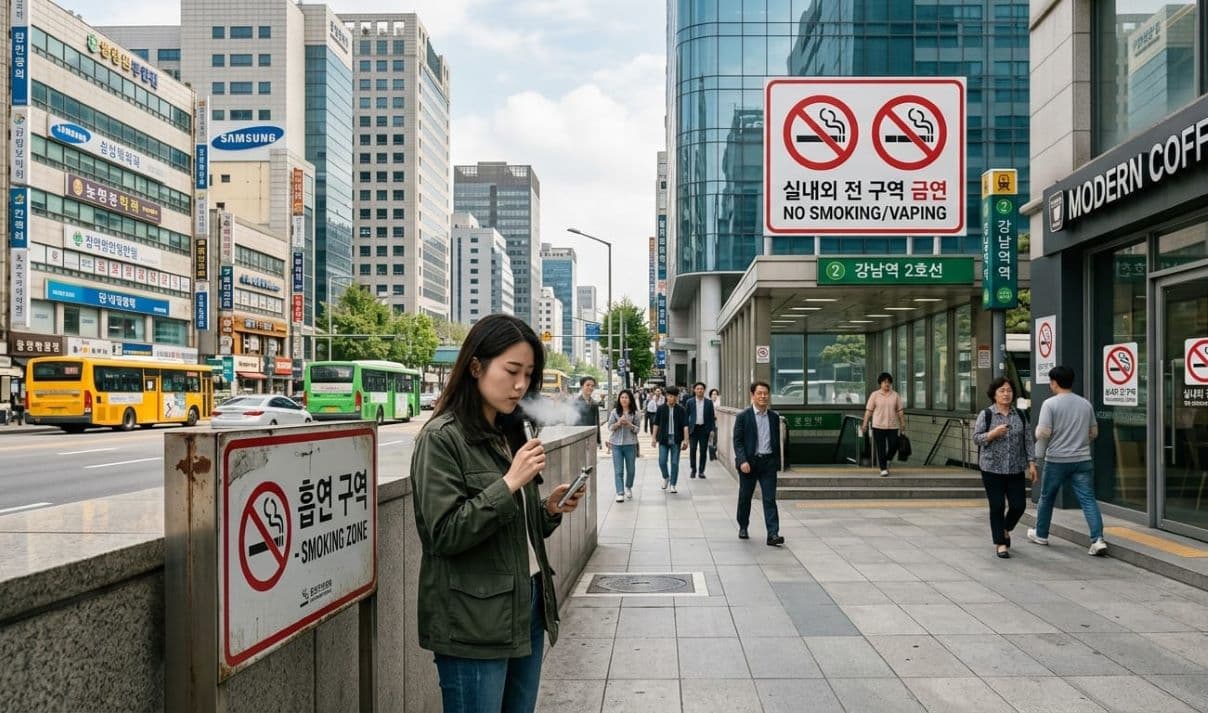
Specifically Prohibited Locations
Under the National Health Promotion Act, vaping is prohibited in all the same locations as cigarette smoking. This includes all indoor public spaces — restaurants, cafes, bars, shopping malls, airports, and public transport terminals. All public transport vehicles — buses, subway trains, taxis — are smoke-free zones. Government buildings, schools, hospitals, and healthcare facilities are strictly enforced no-vaping zones.
The April 2026 amendment specifically added: any location previously exempt due to the synthetic nicotine classification is now fully covered. There are no longer any indoor public spaces where synthetic nicotine vaping is permitted while tobacco smoking is banned.
Fines for vaping in prohibited public areas are up to ₩100,000 — identical to the penalty for smoking in smoke-free zones.
Where Outdoor Vaping Is Still Permitted
Outdoor areas without designated smoke-free signage remain generally accessible for vaping. This includes most streets, parks without specific restrictions, and private outdoor spaces. Designated outdoor smoking zones at workplaces and public buildings are typically also available for vaping. Always check for signage — the scope of outdoor smoke-free zones has expanded in major cities including Seoul, Busan, and Incheon.
Flavours: Currently Unrestricted, With Caveats
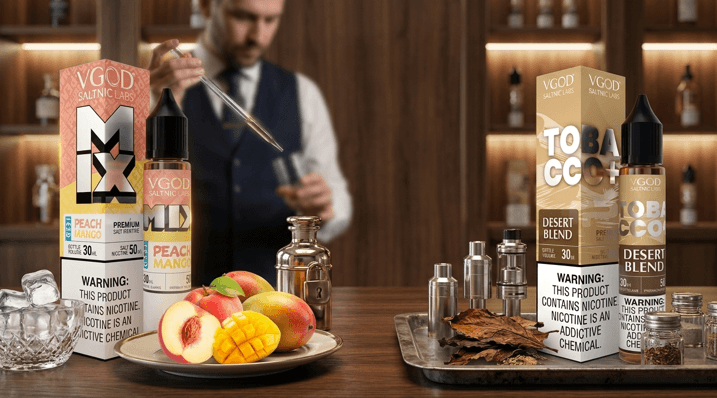
There are currently no restrictions on flavours of these products. Fruit, menthol, dessert, and candy e-liquid flavours remain legal to sell and use in South Korea in 2026. Unlike some US states or the direction of UK regulation, Korea has not enacted a categorical flavour ban.
However, flavor-based marketing aimed at young people will be prohibited. This is not a product ban — it is a marketing restriction. Flavours themselves are unrestricted. Advertising and labelling that uses those flavours to target young people, or naming conventions that specifically appeal to minors, is prohibited under the new advertising framework.
The practical effect: products remain available in all current flavour categories, but how they are labelled, displayed, and marketed must comply with youth-protection requirements. External store displays showing flavoured product branding are now restricted.
Disposable Vapes: Under Scrutiny But Not Banned
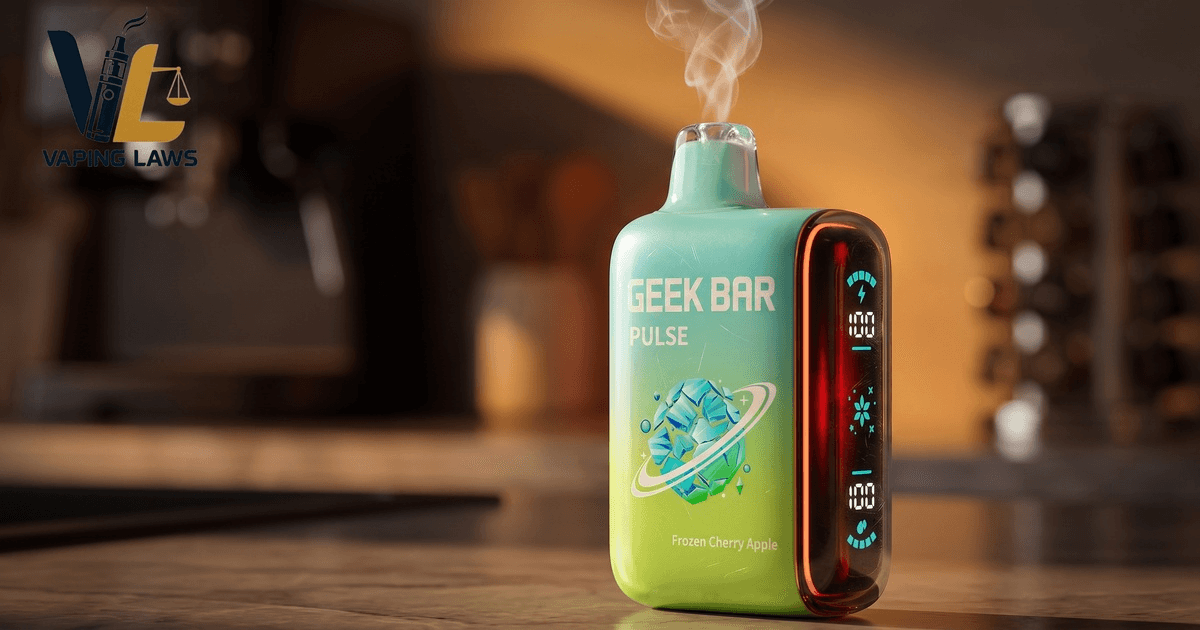
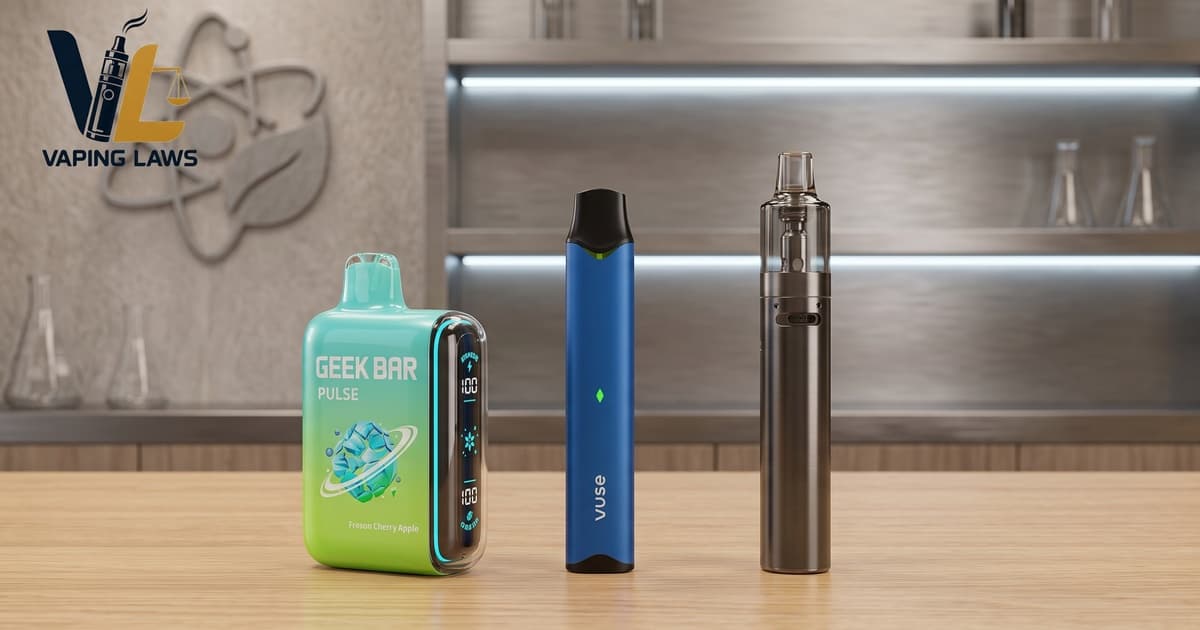
Unlike the UK, which banned single-use disposable vapes from 1 June 2025, South Korea has not enacted a categorical disposable vape ban. Disposable vapes (like GeekBar, Flum, and BLVK) are under heavy scrutiny in 2026 due to their popularity among youth.
The 2026 amendments specifically target disposable vapes through indirect means: mandatory age verification at all sales points, restrictions on vending machine placement, online sales prohibition, and youth-appealing marketing bans. These measures are designed to reduce youth access without removing the product category entirely.
For adult vapers, rechargeable pods are legal — only single-use devices are banned in the UK comparison market. In Korea, both single-use and rechargeable formats remain available, but all must now be sold through age-verified, licensed tobacco retail channels only.
Key South Korea Vaping Law Facts at a Glance
A quick reference for what actually decides what you can buy, sell, or use in Korea in 2026.
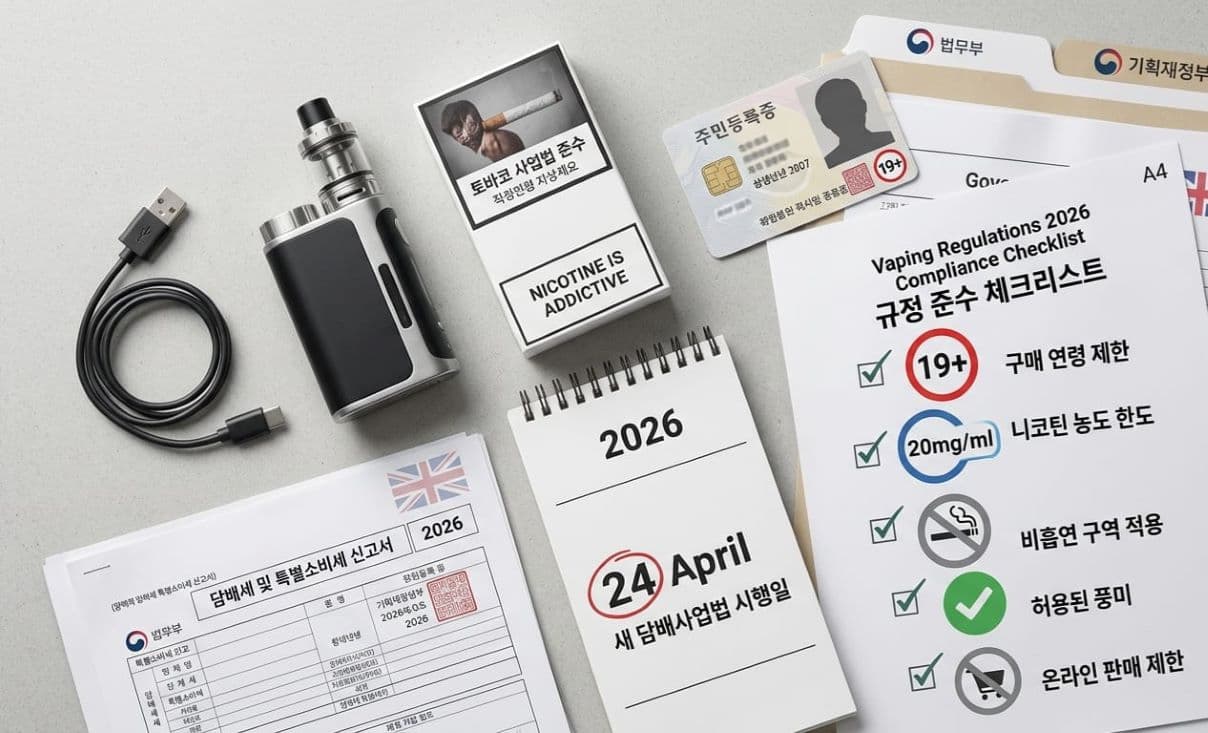
Key Facts at a Glance
- Vaping is legal for adults aged 19+
Applies across all four countries and territories within the Republic of Korea. Age 19 under the Korean age system.
- Synthetic nicotine is now tobacco
The April 24, 2026 Tobacco Business Act amendment closed the synthetic loophole. All nicotine products are now regulated as tobacco regardless of source.
- Nicotine cap: 20mg/ml for domestic retail
Full-strength 50mg products cannot be sold through domestic Korean retail. Legal only through verified international import channels.
- Domestic online sales banned
Korean e-commerce platforms cannot sell nicotine vaping products. Verified international import retailers are the compliant online purchase channel.
- Mandatory health warning packaging
All vaping products must carry graphic health warnings on packaging. Non-compliant products cannot be legally sold.
- Advertising and social media promotion banned
Online advertising, social media promotion, external store displays, and flavour marketing targeting youth are all prohibited.
- Disposable vapes not categorically banned
Unlike the UK, South Korea has not banned disposable vapes. All formats remain available through licensed tobacco retail channels.
- Flavours currently unrestricted
All existing flavour categories remain legal. Marketing those flavours to youth is prohibited, but the products themselves are not restricted by flavour.
- Smoke-free zones now apply to all vaping
Indoor public spaces, transport, schools, hospitals — vaping is banned everywhere cigarette smoking is banned. Fines up to ₩100,000.