




















Loading...
›
›
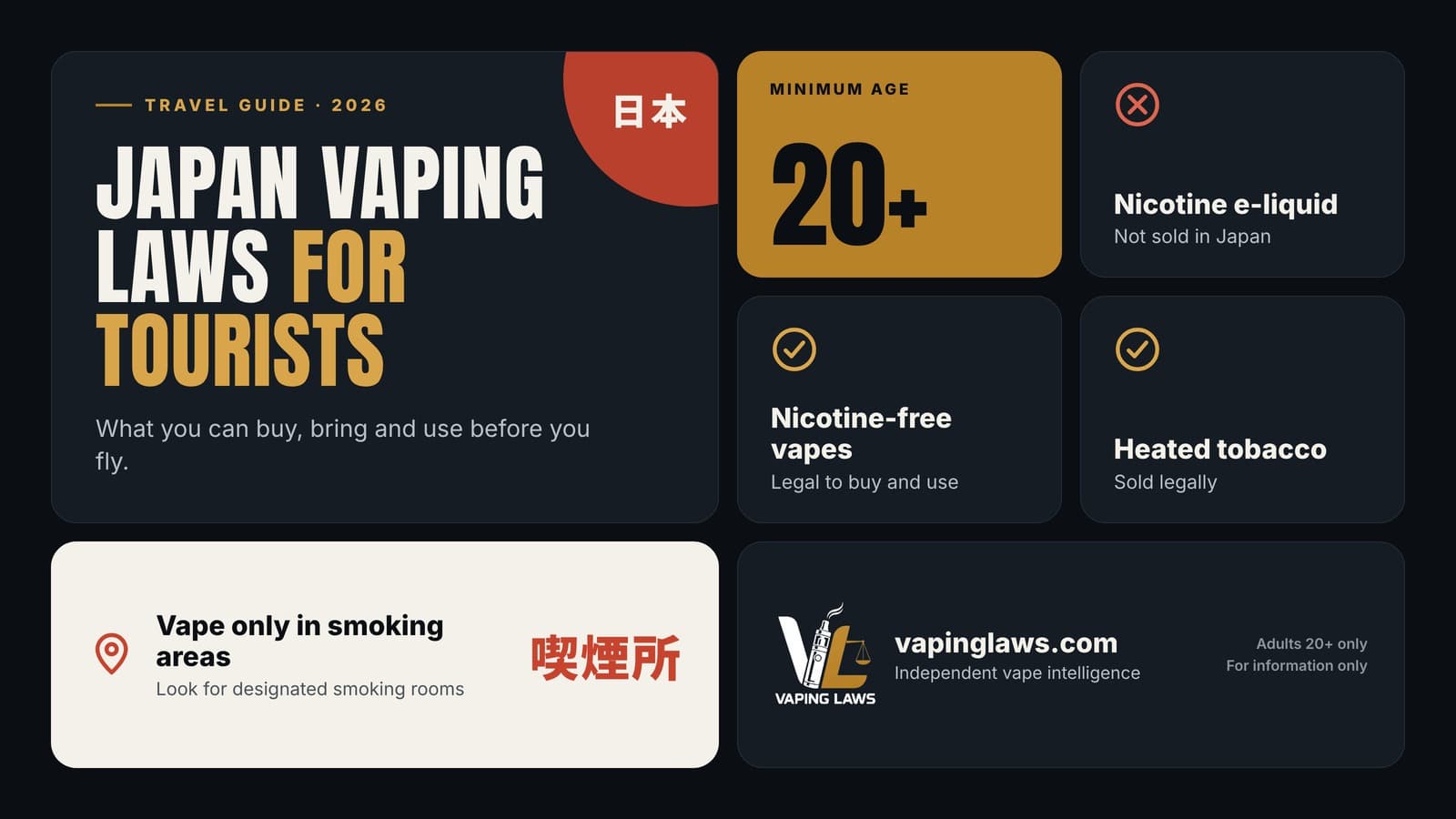
Can you vape in Japan as a tourist? Learn Japan vaping laws, nicotine e-liquid customs limits, where you can vape, the legal age and mistakes to avoid in 2026.
Online store
Explore the brands and product categories linked in this guide.
Categories
Brands
Showing 47 Products
Our independent testing team buys every device at retail and runs standardised bench tests — battery drain, pod performance, and 30-day cost tracking. We accept no brand payments or paid placements.
More from Guides
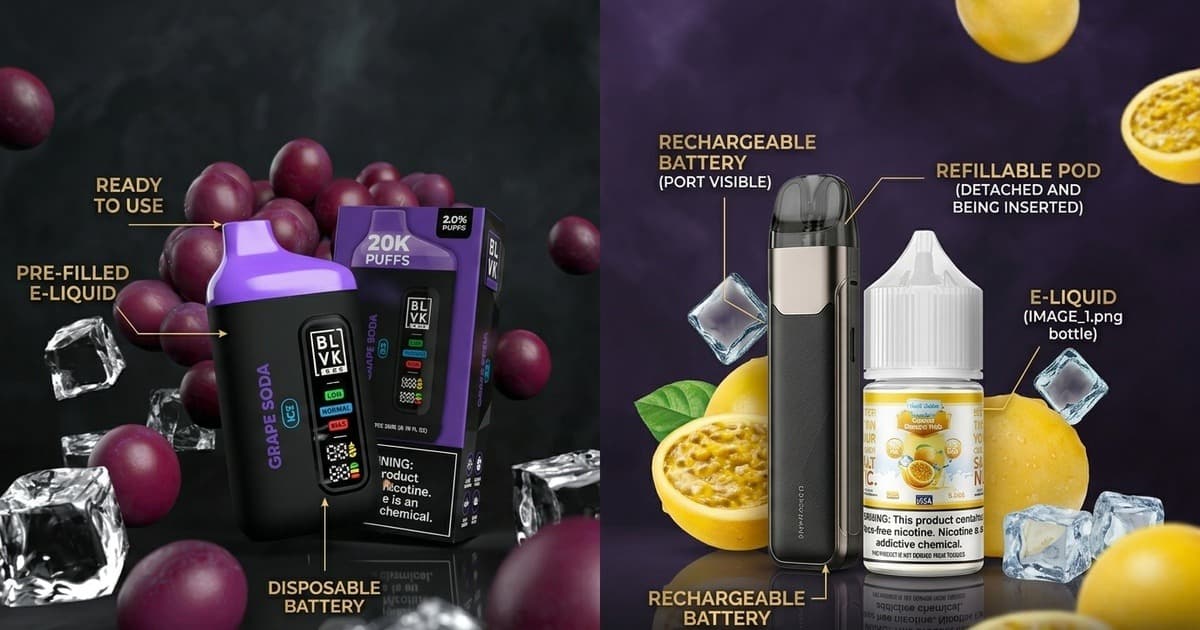
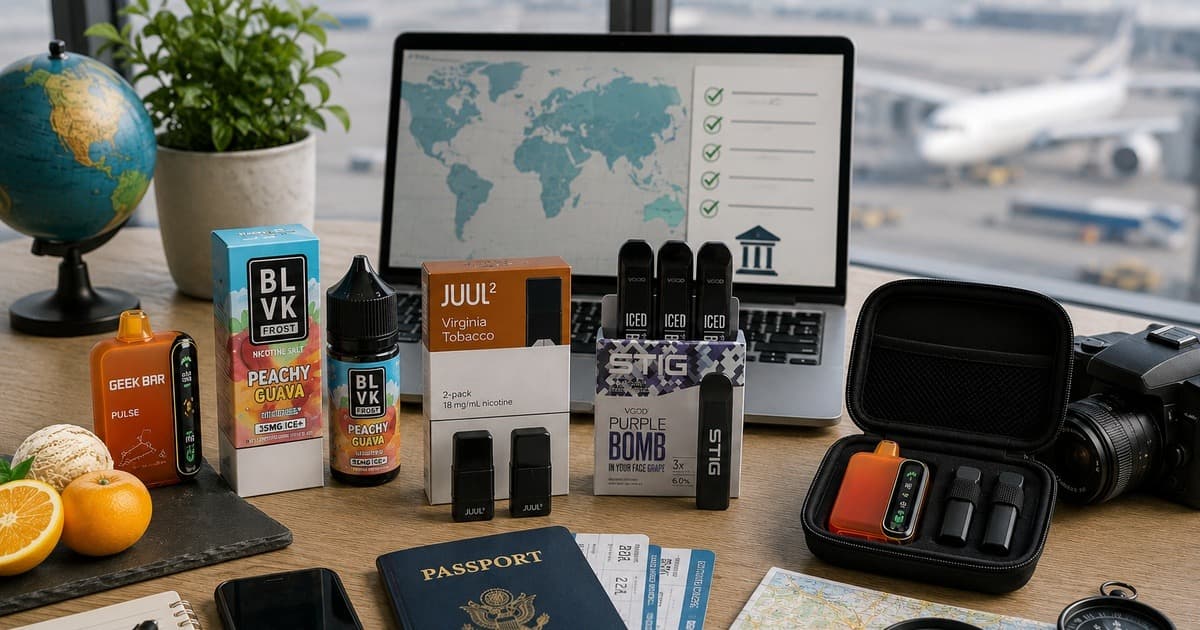
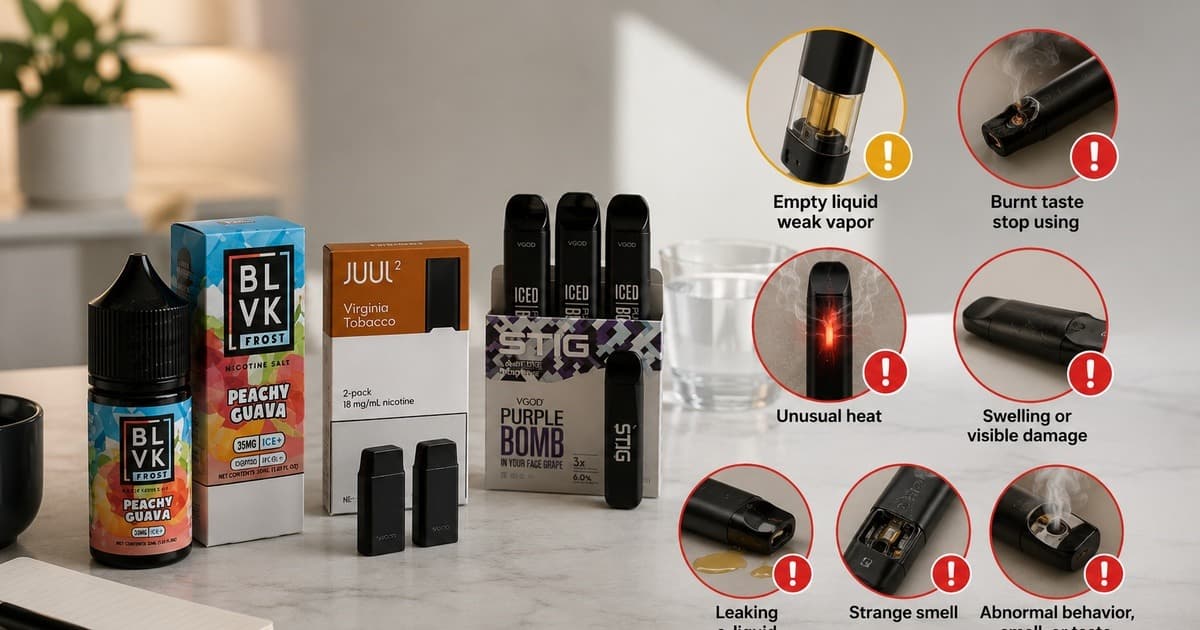


If you are planning a trip to Japan and wondering can you vape in Japan, it is important to understand the country's rules before packing your device. Japan has specific regulations for nicotine-containing e-cigarettes, personal imports, public smoking areas, and heated tobacco products.
For international visitors, the rules can be confusing because Japan does not treat every vape product in the same way. Nicotine-containing e-liquid and cartridges are regulated under pharmaceutical laws, while nicotine-free vape products are treated differently.
Whether you are visiting Tokyo, Osaka, Kyoto, or another Japanese city, knowing the rules can help you avoid problems at customs and understand where vaping may be restricted.
This guide explains Japan vaping laws for tourists in 2026, including bringing a vape through customs, nicotine e-liquid limits, public vaping restrictions, airline rules, and common mistakes visitors should avoid.
Quick Answer: Can You Vape in Japan as a Tourist?
Tourists can bring e-cigarettes and e-liquids into Japan, subject to product-specific regulations. Nicotine-containing e-liquid and cartridges are treated as pharmaceutical products and are subject to personal-import limits. Japan's tourism authority advises visitors that vaping is prohibited in many public places and recommends using designated smoking areas. Always check the latest customs, local, and airline rules before travelling.
The answer depends on the type of vape product and how it is being imported, sold, or used.
Japan distinguishes between nicotine-containing e-cigarette products, nicotine-free vape products, and heated tobacco products.
According to Japan's Ministry of Health, Labour and Welfare (MHLW), e-cigarette cartridges and liquids containing nicotine are treated as pharmaceutical products under Japan's pharmaceutical regulations.
Unapproved nicotine-containing e-cigarette products cannot be legally sold, transferred, or advertised domestically. Personal importation for an individual's own use is treated separately and is subject to specific conditions.
For tourists, this distinction is important. Being allowed to bring a limited personal supply into Japan does not mean that the same product can legally be sold in Japanese shops.
Nicotine-containing e-liquid and cartridges are regulated differently from ordinary nicotine-free vape products.
Visitors bringing these products into Japan should:
If you are unsure whether a product contains nicotine, check the manufacturer's information rather than relying only on the packaging design.
Nicotine-free vape products are treated differently from nicotine-containing e-cigarettes.
However, the label alone should not be your only source of information. Check the ingredients, manufacturer details, and product specifications before travelling.
Japanese authorities have raised concerns about imported products that may contain nicotine despite being labelled nicotine-free. For this reason, checking reliable product information is important.
Heated tobacco products are not the same as liquid-based e-cigarettes.
Products such as IQOS, Ploom, and glo heat tobacco rather than using conventional vape liquid. They fall under tobacco-related regulations and should not be treated as ordinary nicotine-free vape devices.
The rules for heated tobacco products may therefore differ from those for liquid-based vapes.
Yes. Japan's official tourism guidance confirms that visitors can bring e-cigarettes and e-liquids into the country, but important regulations apply.
The most important consideration is whether the e-liquid or cartridge contains nicotine.
Nicotine-containing products are treated as pharmaceutical products, and Japan has specific personal-import limits for them.
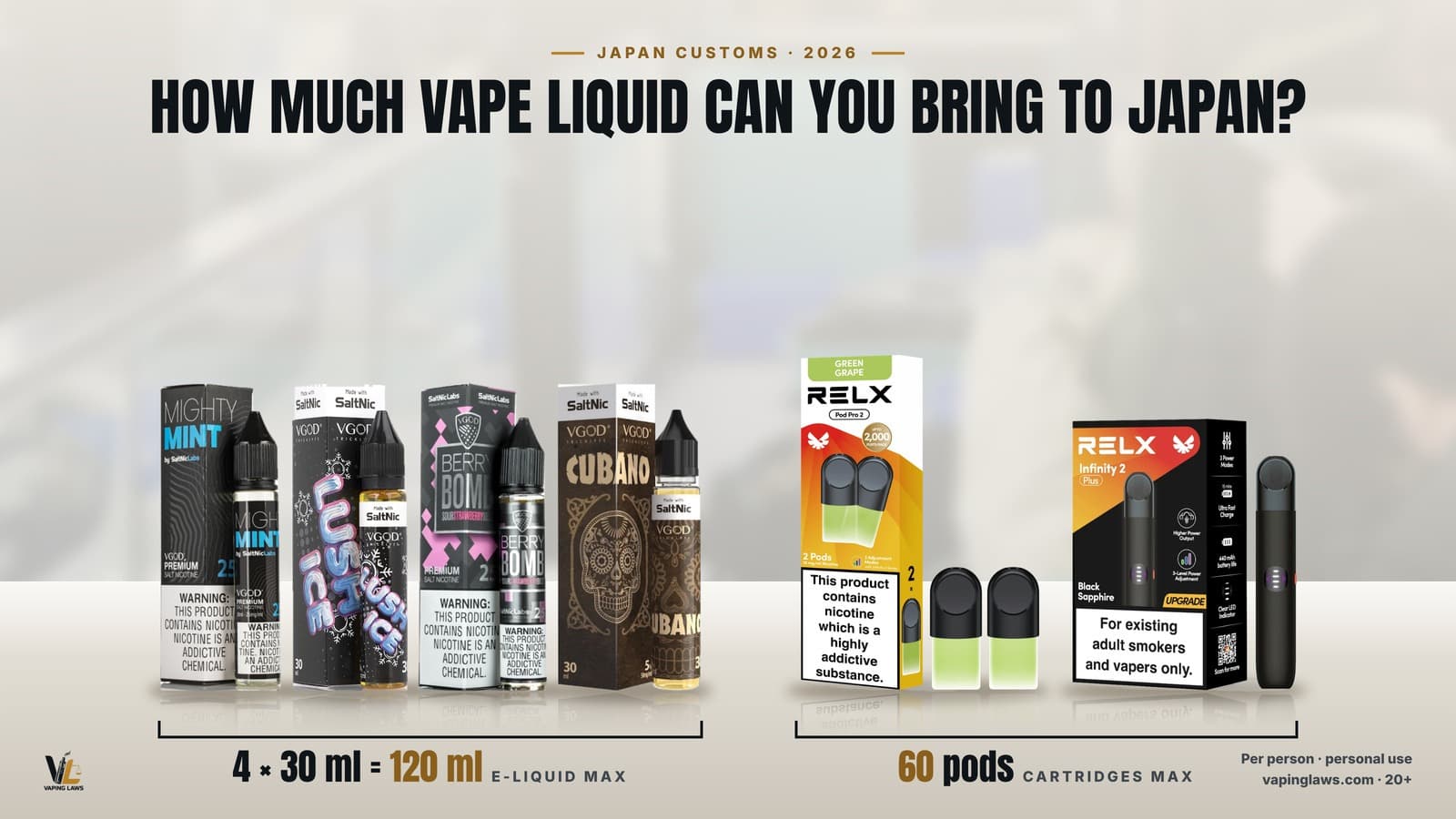
Under Japan's MHLW import guidance, the quantity that can generally clear customs without an Import Confirmation Certificate is one month's supply.
| Product | One-month personal-import limit |
|---|---|
| Nicotine e-liquid | 120 ml |
| Nicotine cartridges | 60 units |
| Equivalent inhalations | 12,000 puffs |
| Cigarette equivalent | 1,200 cigarettes |
Important: These figures are alternative ways of expressing the one-month allowance, not separate quantities that can automatically be added together.
If you bring both cartridges and bottled e-liquid, their quantities are combined when assessing the applicable allowance. Where both liquid volume and puff count are stated, the lower applicable customs quantity may determine the permitted amount.
If you plan to bring more than the permitted one-month supply, additional import procedures and an Import Confirmation Certificate may be required.
Before travelling, check the latest MHLW guidance for your exact product and quantity.
A disposable-style vape may contain nicotine or may be nicotine-free. Its appearance does not determine how Japanese authorities classify it.
Before packing a disposable vape, check:
If a disposable device contains nicotine, do not assume that it is exempt from the rules simply because it is sold as a ready-to-use device.
Yes, but nicotine-containing cartridges and pods count toward the applicable personal-import allowance.
Check the number of cartridges and whether they contain nicotine. Keep them in their original packaging where possible so their product details are easier to identify.
Products imported for personal use must not be sold or transferred to other people.
Knowing whether you can bring a vape in Japan is only part of the process. You should also understand where vaping is permitted or restricted after arrival.
Japan has smoking restrictions in many public places, and local rules can differ between cities, municipalities, buildings, and private venues.
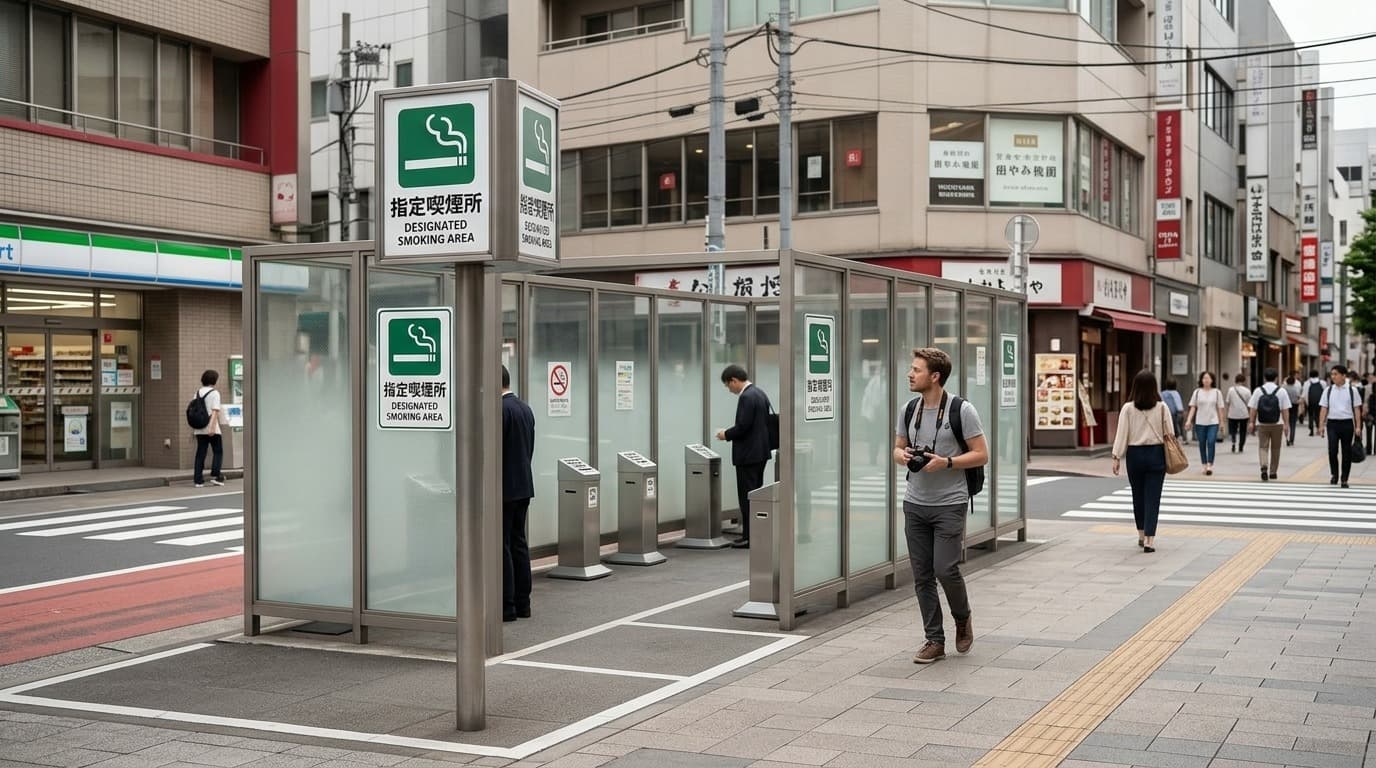
The Japan National Tourism Organization advises visitors that smoking, including vaping, is prohibited in many public places and recommends using designated smoking areas.
Do not assume that vaping is allowed everywhere outdoors.
Many Japanese cities restrict outdoor smoking in selected areas. Some districts have designated smoking zones, while others impose restrictions on smoking or vaping in public spaces.
Tokyo is one example where visitors should pay attention to local rules.
If you are walking through busy shopping streets, railway areas, or tourist districts, look for signs explaining where smoking is permitted.
The simplest approach is to avoid vaping while walking and use a designated area where it is permitted.
Do not assume that you can vape inside restaurants, cafes, or bars.
Many indoor public spaces in Japan have smoking restrictions. Some establishments may have designated smoking areas or separate policies for different products.
Before using a vape indoors:
Even where a particular type of e-cigarette falls outside a specific national smoking restriction, a private venue may still prohibit its use.
Hotel policies can vary.
Some hotels are entirely smoke-free, while others may have designated smoking rooms or outdoor smoking areas.
Before booking accommodation, check the hotel's official rules. If you are already staying at a hotel, ask the reception team where vaping is permitted.
Never assume that a smoking room automatically permits every type of vape product.
For visitors, the most straightforward option is to use a clearly marked designated smoking area where the relevant product is permitted.
This is particularly important in busy areas of Tokyo, Osaka, Kyoto, and other popular tourist destinations.
Japan's legal age for purchasing and using tobacco products is 20.
This applies to tobacco products, including heated tobacco products. Japan lowered its general age of adulthood to 18, but the tobacco age remained 20.
However, nicotine-containing e-cigarettes have a different legal classification from tobacco products. Japan's MHLW has specifically discussed the absence of the same age restriction for the use of nicotine-containing e-cigarettes, while domestic sales, transfers, and advertising of unapproved products remain prohibited.
For tourists, the important point is not to assume that the tobacco age rule and the regulatory treatment of every e-cigarette product are identical.
Always check the current official rules for the product you are carrying or using.
Airline rules are another important part of travelling with an electronic cigarette.
Vape devices usually contain lithium batteries, so airlines have specific requirements for carrying them.
In general, passengers should:
Japan's aviation authorities prohibit using electronic cigarettes in aircraft toilets. Airlines may also impose stricter restrictions on use and charging throughout the flight.
Do not pack a vape device or spare lithium batteries in checked baggage without checking the airline's current rules.
Lithium battery devices are generally subject to carry-on requirements. The airline's baggage policy should be your final reference for your particular flight.
Do not assume that charging is permitted.
Airlines can restrict charging electronic smoking devices during a flight. Check the airline's policy and follow cabin crew instructions.
Understanding Japan vape laws can help visitors avoid common travel mistakes.
Nicotine-containing e-liquids, nicotine-free vape products, and heated tobacco products are treated differently.
Check the exact product rather than relying on the general term vape.
1. Assuming All Vape Products Have the Same Rules
Japan's simplified personal-import allowance is based on one month's supply.
If you bring more than the permitted quantity, additional import procedures may be required.
2. Bringing More Than the Permitted Nicotine Supply
Some Japanese cities restrict outdoor smoking in selected areas.
Even where a particular liquid vape is treated differently under national rules, local restrictions and venue policies still matter.
3. Vaping While Walking
Hotel policies vary. Always check before using an electronic cigarette inside your accommodation.
4. Assuming Hotels Allow Vaping
Check the ingredients and manufacturer information. A product's label should not be your only source of confirmation.
5. Trusting Every Nicotine-Free Label
Products imported under personal-use provisions are not for resale or distribution.
Do not sell or give your imported nicotine-containing products to another person.
6. Sharing or Selling Imported Nicotine Products
Vaping regulations and customs procedures can change.
Use current official Japanese sources before travelling, especially if you are carrying nicotine-containing products.
7. Relying on Outdated Travel Information
Before leaving for Japan, review the following points:
Taking these steps before departure can help you avoid confusion at the airport and during your stay.